

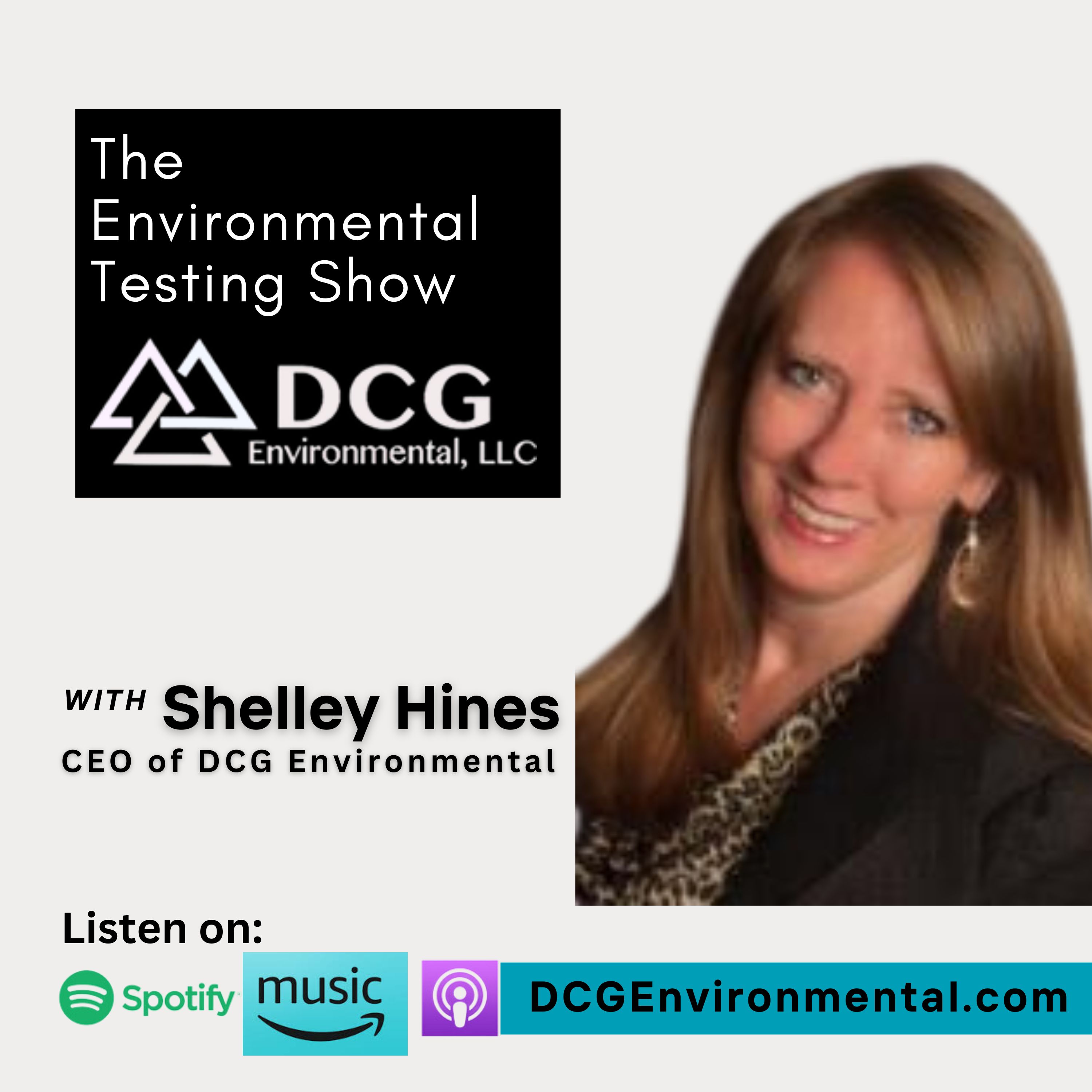
From Mold To Meth: Inside DCG Environmental With Shelley Hines
Building Trust Through Consistency and Education
Environmental hazards rarely introduce themselves. Most remain invisible, misunderstood, and easy to dismiss until something forces attention—a strange odor, a lingering cough, a contractor’s concern, or a fire that leaves more questions than answers. Shelley Hines operates squarely in that space between uncertainty and clarity. As the leader of DCG Environmental, she has built a career around identifying what others cannot see. While many people associate her firm primarily with asbestos testing, their scope extends far beyond it. DCG investigates fire residues, contaminated water, combustible byproducts, and even narcotics contamination when safety is in doubt. Buildings are complex systems, and a single event can trigger a cascade of hidden risks. A fire, for example, doesn’t simply leave soot behind; it can distribute particulates, toxic gases, and chemical residues through ductwork and wall cavities long after the flames are extinguished. For Hines, testing is not about drama—it is about certainty. Clear data reduces panic, guides remediation correctly, and protects budgets by eliminating guesswork.
Over the years, Shelley Hines has learned that trust is earned through consistency, not slogans. DCG Environmental grew organically for more than a decade because communities in Dallas, Houston, and Austin recognized the firm’s reliability. Clients knew DCG would show up quickly, explain findings plainly, and deliver accurate results. Word of mouth propelled the company further than any marketing campaign could.
Eventually, Hines recognized the need to scale intentionally. That shift led to a revamped website, expanded resources, and dedicated business development support. Yet even with these changes, the core of DCG’s work remains unchanged: service, accuracy, and education. When people understand their situation clearly, they make better decisions. Education becomes a form of protection—it prevents unnecessary demolition, keeps contractors accountable, and ensures families and property owners aren’t paying for work they don’t need. A test may not fix the issue, but it defines it. That definition makes the next steps safe, targeted, and cost‑effective.
Hines emphasizes that clarity is the antidote to fear. She often reminds clients that they have “Googled themselves into a frenzy,” a phrase that resonates because it is true. Fear thrives in the gaps between assumption and fact. Her job is to close those gaps using established standards such as NIOSH sampling methods for particulates and EPA protocols for asbestos inspections. She translates lab reports into clear, actionable steps that homeowners and facility managers can follow without confusion or jargon.
The Human Side of Testing
Shelley Hines’s personal life mirrors the work she does. With four dogs—each with an outsized personality—and weekends spent on a hunting lease running an excavator, she gravitates toward environments where progress is visible. Environmental testing operates on the same principle: move the brush, expose the ground, map the risk.
At the heart of her work is purpose. Testing is a way to serve—her team, her church, and the communities DCG supports. It removes uncertainty for families and creates space in her own life to rest, travel, and recharge. That balance fuels her commitment. It is what keeps her answering late‑night calls from worried parents and pushing for faster turnaround times and clearer reporting. When education is the mission, the deliverable becomes more than a PDF. It becomes a decision‑making tool.
Clients learn when mold is surface‑level versus structural, how asbestos risk changes when materials remain undisturbed, and why combustion byproducts travel unevenly through a home. Practical guidance is central to Hines’s approach. After a fire, she advises testing for soot and combustible byproducts before painting or replacing filters. When a musty odor appears, she recommends starting with moisture mapping and targeted sampling rather than bleach. If a tenant reports headaches, indoor air quality testing that evaluates VOCs, particulates, and humidity patterns can reveal hidden issues. And when narcotics contamination is suspected, certified sampling is essential because improper cleaning can worsen the situation.
The principle is simple: test first, decide second. That approach protects health, saves money, and shortens the path from alarm to action.
Clear Guidance
Looking forward, Shelley Hines plans to address the most common questions she encounters in the field and turn them into accessible, actionable guidance. People want to know when to test, how to read a chain of custody, and what detect versus non‑detect truly means. Her goal remains steady: reduce fear, increase understanding, and help people navigate their homes and workplaces with confidence. Education is the antidote to frenzy, and indoor air quality data is the map.
To learn more about DCG Environmental visit:
https://www.DCGEnvironmental.com
DCG Environmental
Serving Property Owners in Dallas, Houston, and Austin
972-876-0008

about
Sophia Yvette
Executive Producer, Good Neighbor Podcast: Frisco
Contact
(469) 221-9345
Navigation
Copyright © 2026. All rights reserved by Good Neighbor Partners, LLC | Terms and Conditions | Privacy Policy